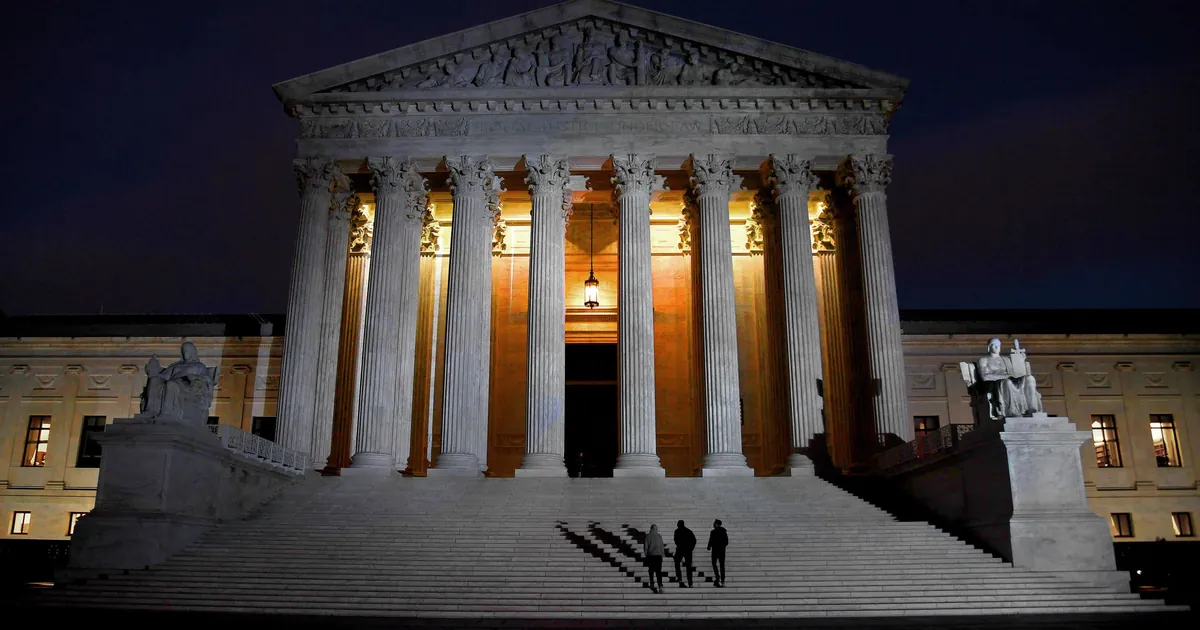
The U.S. Supreme Court ruled on June 29 in Trump v. Slaughter that President Donald Trump may remove Federal Trade Commission commissioners despite statutory limits allowing removal only for inefficiency, neglect of duty, or malfeasance.
The court held that the FTC exercises executive power and that Article II requires the president to have authority to supervise and remove officers who carry out that power. It said the agency’s current functions, including rulemaking, administrative adjudication, and civil enforcement in federal court, place it within executive authority, and that any part of Humphrey’s Executor inconsistent with that conclusion was overruled.
The dispute arose after Trump removed FTC commissioners Rebecca Kelly Slaughter and Alvaro Bedoya, with Slaughter challenging the action after a lower court had declared her removal unlawful. The Supreme Court said its decision did not define the status of every congressionally created office and noted that some institutions may rest on distinct historical traditions.
In a separate decision issued the same day in Trump v. Cook, the court said Federal Reserve Governor Lisa Cook could remain in office while litigation continues over Trump’s attempt to remove her. The court said the Federal Reserve has a distinct historical basis for independence and that its for-cause protections can be consistent with Article II, adding that the injunction in that case blocked implementation of the specific removal letter at issue but did not prevent a new removal attempt using a different process.