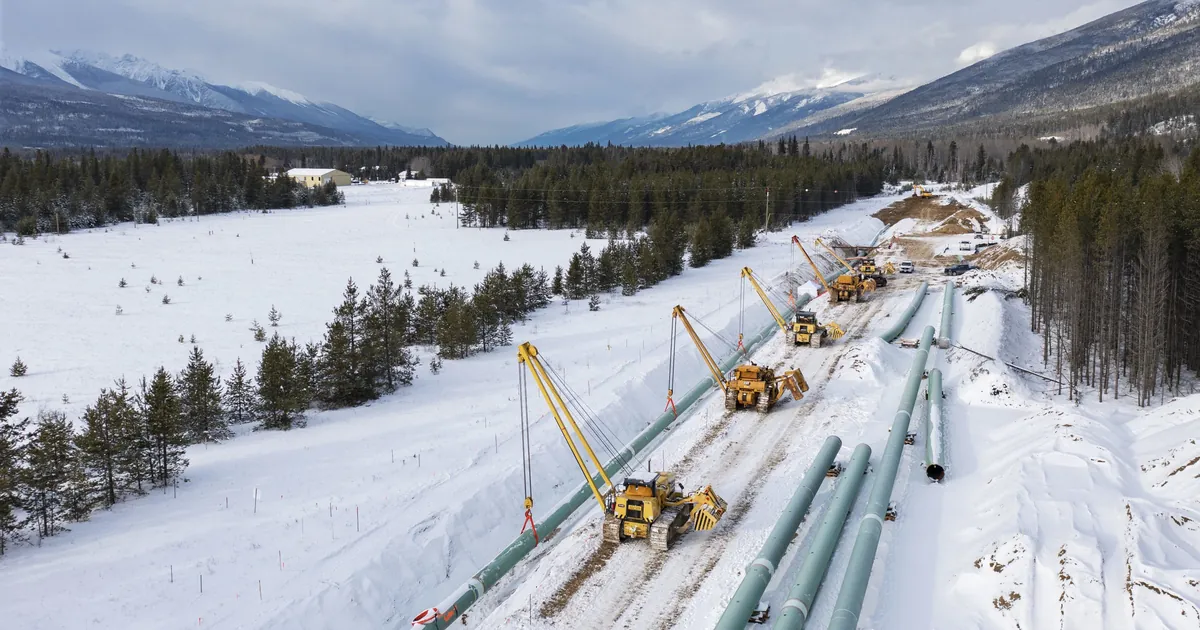
Canada and Alberta said on July 2 they are advancing a proposed 1 million barrel-per-day heavy-crude pipeline from Alberta to British Columbia’s west coast, and Ottawa will refer the project to the Major Projects Office for possible national-interest listing under the Building Canada Act.
Government documents describe the line as running largely along the existing Trans Mountain corridor, starting at a receipt terminal in the Bruderheim area and extending to a marine terminal in southern British Columbia for vessel loading. Officials said the route would not require changes to the Oil Tanker Moratorium Act.
Trans Mountain will lead development, construction and operations, while Pembina will hold a 10% economic interest during construction with an option to increase that by up to another 10% at commercial operation. The remaining ownership is to be shared equally by Trans Mountain Corporation and the Alberta Petroleum Marketing Commission, with consultations on Indigenous equity participation starting immediately.
The Major Projects Office process will begin consultations with Indigenous groups, provinces and territories and could lead to a streamlined federal review if the project is listed. British Columbia said it will participate in routing and permitting discussions within its jurisdiction under a cooperative agreement that keeps the federal tanker ban in place and links the project to consultation obligations with First Nations and support for route-area Indigenous equity participation. Alberta said potential construction could begin as early as Sept. 1, 2027, subject to consultation, approvals and permitting. The federal and Alberta governments also linked the pipeline to an agreement with the Oil Sands Alliance to advance the Pathways carbon capture and storage project, which they said targets 16 million tonnes a year of emissions reductions. Canada’s crude export system remains concentrated on the U.S.; the Canada Energy Regulator said about 97% of crude exports went to the U.S. in 2023, while Statistics Canada said the non-U.S. share rose to 10.9% in 2025 after the first full year of expanded Trans Mountain operations.