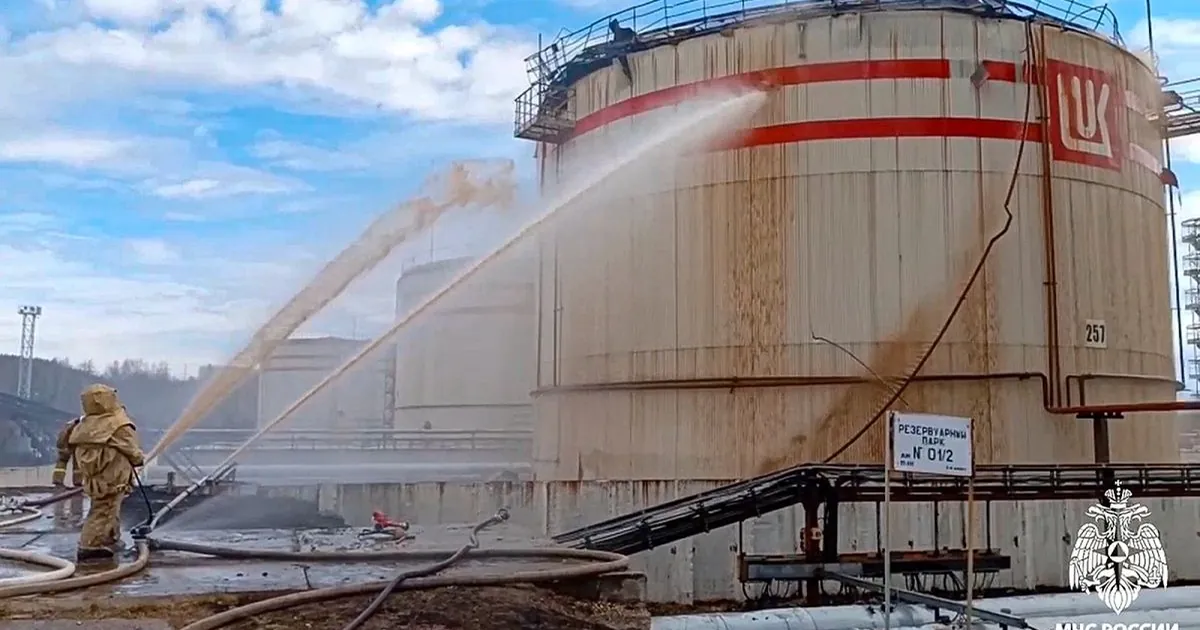
Russia’s gasoline market tightened across a wider area in August after Ukrainian drone attacks damaged refineries including Ukhta, Ryazan, Saratov, Volgograd, and the Samara group of Syzran, Samara, and Novokuibyshev, with additional attacks reported in Rostov and Krasnodar.
Reported assessments said the 2025 strike pattern involved repeated attacks and larger drone groups that caused heavier damage and, in some cases, shutdowns, while 2024 attacks more often reduced capacity without prolonged stoppages. The pressure on supply coincided with refinery maintenance and stronger seasonal demand during the harvest period and summer travel season.
In the week beginning Aug. 18, wholesale A-92 gasoline was about 53.5 rubles a liter, compared with retail near 59.5 rubles, versus about 47.72 rubles wholesale and 58.5 rubles retail in mid-July. Retail prices were reported to be rising by roughly 15 to 25 kopecks per liter a week, while market monitoring has focused on SPIMEX wholesale pricing because retail prices move more gradually under formal and informal controls.
Authorities have responded by redirecting product flows from unaffected regions, prioritizing rail shipments, drawing on state reserves, and using existing fuel-market support mechanisms, including the damper system and export restrictions used in 2024. Reported assessments also said damaged refineries were still producing at reduced rates, diesel remained in surplus, and any gasoline shortfall could be partly covered by redistribution and, if needed, imports from Belarus.